April 2026

How to prepare for treatment in Chennai.

[Healthpurem][10 min]

Featured image for blog article
  • Essential Medical Documents and Records to Gather
  • Visa and Legal Documentation Requirements
  • Travel Planning and Logistics Management
  • Financial Preparation and Cost Management
  • Pre-Treatment Medical Coordination
  • Conclusion

Introduction

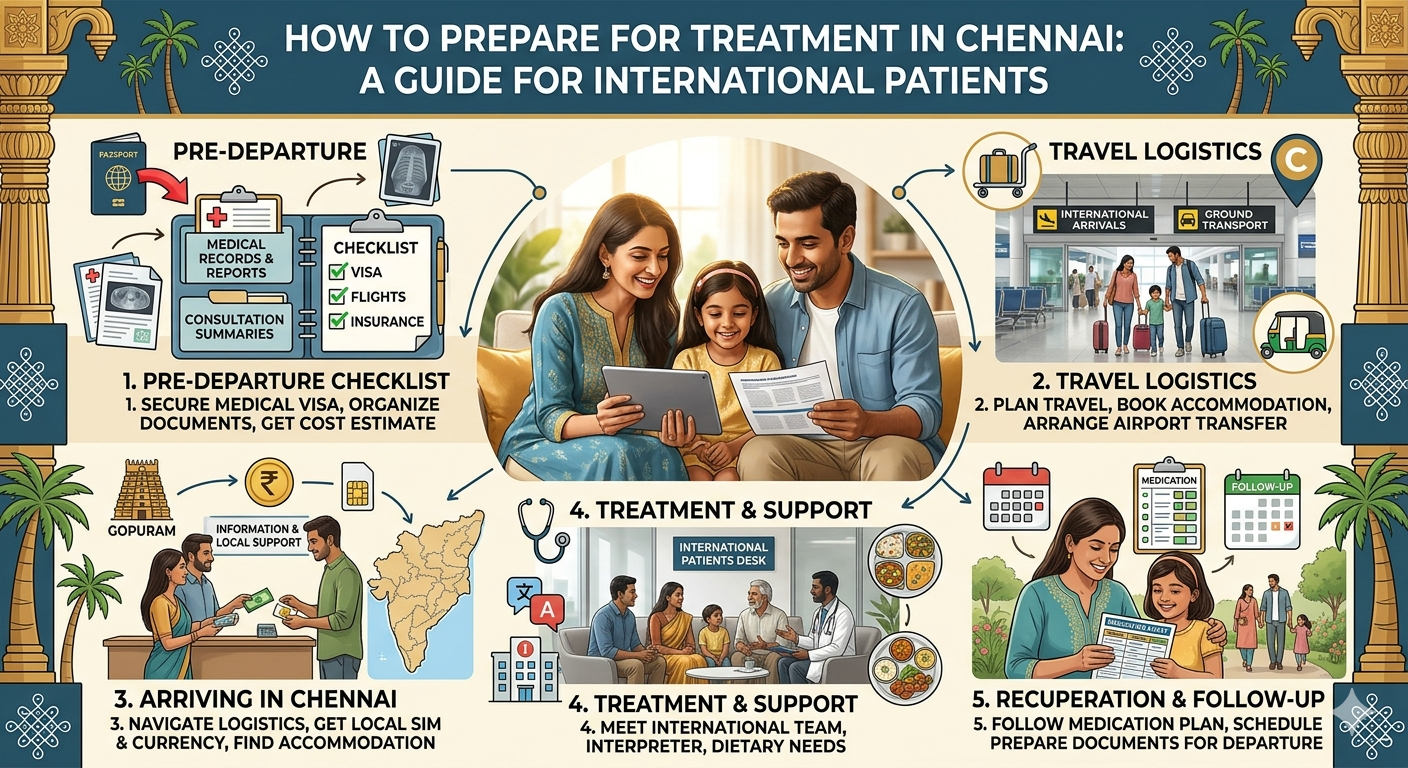
Getting medical treatment in Chennai can feel overwhelming, especially when you're coming from another country. This guide is for international patients who want to know exactly what to expect and how to prepare for treatment in Chennai before they arrive. Planning ahead makes all the difference between a smooth medical journey and a stressful one. You'll need the right paperwork, proper travel arrangements, and a clear understanding of the healthcare system. We'll walk you through gathering your essential medical documents and records, plus handling visa requirements and legal documentation. You'll also learn practical travel planning tips and what to expect from Chennai's medical facilities once you get there.

Essential Medical Documents and Records to Gather

Obtain complete medical history and current diagnosis reports

Gathering your complete medical history forms the foundation of successful treatment abroad. Start by requesting comprehensive records from all healthcare providers who have treated your condition. This includes primary care physicians, specialists, surgeons, and any emergency room visits related to your current health issues. Your medical history should span at least the past five years, but include earlier records if they relate to your current condition. Request detailed documentation of previous treatments, surgeries, hospitalizations, and any complications you've experienced. Many hospitals in Chennai require this information to understand your medical journey and avoid repeating unnecessary procedures. Contact your current doctor's office and request both physical and digital copies of your records. Most facilities can provide records on CD or through secure patient portals. Ask for summaries in English if your original records are in another language, as this saves time and reduces translation costs later.

Secure latest diagnostic test results and imaging scans

Recent diagnostic tests carry more weight than older results when planning treatment. Collect all imaging scans from the past 12 months, including X-rays, CT scans, MRIs, ultrasounds, and any specialized imaging studies. These digital files should be saved in DICOM format, which is the international standard that Chennai hospitals can easily access.

Blood work, pathology reports, and biopsy results from the past six months are particularly valuable. If your tests are older than three months, consider getting updated blood work before traveling. Many Chennai hospitals prefer fresh baseline values to track your progress during treatment.

Store all imaging on multiple devices - cloud storage, USB drives, and CDs. Digital copies prevent damage during travel and allow for easy sharing with your medical team. Request written reports that accompany each scan, as these provide crucial interpretation details that radiologists in Chennai will reference.

Collect prescription medications list and dosage information

Create a detailed medication list that includes generic names, brand names, dosages, frequency, and the reason for each prescription. This information helps Chennai doctors understand your current treatment regimen and prevents dangerous drug interactions with new medications.

Include over-the-counter medications, supplements, and herbal remedies you take regularly. What seems minor to you might interact with treatments planned in Chennai. Take photos of actual medication bottles showing labels clearly, as this provides backup verification of dosages and instructions.

Ask your pharmacist for a printed medication profile that shows your prescription history. This document often reveals patterns your doctor might not remember and ensures nothing gets overlooked. Some Chennai hospitals require patients to continue certain medications during treatment, so having exact formulations documented prevents delays.

Request referral letters from your current healthcare providers

Referral letters serve as professional introductions between your home doctors and Chennai medical teams. These letters should outline your condition, treatment history, current status, and specific recommendations for care abroad. Request these letters on official letterhead with your doctor's credentials clearly listed.

Your referring physician should include their contact information for follow-up questions. Chennai doctors often want to discuss complex cases directly with referring physicians, especially for surgical procedures or experimental treatments. Having this communication channel established beforehand prevents treatment delays.

Ask for letters from multiple specialists if your condition involves several medical disciplines. Each specialist brings a different perspective that helps Chennai doctors develop comprehensive treatment plans. These letters also demonstrate that multiple experts support your decision to seek treatment abroad, which can influence insurance coverage decisions.

Visa and Legal Documentation Requirements

Apply for appropriate medical visa category

India offers several visa types for international patients seeking medical treatment. The Medical Visa (M visa) is specifically designed for patients traveling to India for medical purposes and allows for multiple entries with stays up to six months. This visa category covers treatment at recognized hospitals, Ayurveda treatments, and specialized medical procedures.

For patients requiring longer treatment periods, the Medical Attendant Visa allows family members or caregivers to accompany the patient. Each medical visa application requires a letter from the treating hospital in Chennai confirming your appointment and treatment plan. The hospital must be recognized by the Indian government and registered with the Ministry of External Affairs.

Processing times vary by country, typically taking 3-7 business days for regular applications. Emergency medical visas can be processed within 24-48 hours with proper documentation. Consider applying at least 2-3 weeks before your planned travel date to account for any delays or additional document requests.

Gather passport and identification documents

Your passport must be valid for at least six months from your intended date of arrival in India. Check that you have at least two blank pages for visa stamps and entry/exit markings. Make multiple photocopies of your passport's bio-data page and keep them in separate locations.

Bring government-issued photo identification as backup documentation. Driver's licenses, national identity cards, or voter registration cards serve as additional proof of identity. Some medical facilities may require these documents for patient registration and verification processes.

Create digital copies of all identification documents and store them securely in cloud storage or email them to yourself. This provides access to your documents even if physical copies are lost or damaged during travel. Consider carrying a notarized copy of your passport as an extra precaution.

Obtain travel insurance with medical coverage

Medical travel insurance is essential for international patients, even when traveling specifically for treatment. Standard policies often exclude pre-existing conditions, so look for specialized medical travel insurance that covers complications, emergency procedures, or extended stays due to medical reasons.

Your insurance should include coverage for emergency medical evacuation, trip cancellation due to medical reasons, and coverage for medical complications arising from your planned treatment. Some insurers offer policies specifically designed for medical tourism that provide comprehensive protection during your treatment journey.

Read policy exclusions carefully, particularly regarding pre-existing conditions and specific procedures. Contact your insurance provider to confirm coverage details for your planned treatment in Chennai. Keep physical and digital copies of your insurance certificates and emergency contact numbers readily accessible.

Prepare financial proof and sponsorship documents

Indian visa applications require proof of sufficient funds to cover your medical treatment and living expenses during your stay. Bank statements from the past three months, showing consistent account activity and adequate balance, are typically required. The exact amount varies but should demonstrate ability to cover treatment costs, accommodation, and daily expenses.

If someone else is sponsoring your treatment, you'll need sponsorship letters, their financial documents, and proof of relationship. Sponsors must provide bank statements, income tax returns, and employment verification letters. Some consulates require notarized sponsorship affidavits detailing the financial responsibility agreement.

Prepare a detailed cost estimate from your treating hospital in Chennai, including treatment fees, accommodation costs, and estimated living expenses. This documentation helps visa officers assess the financial requirements for your medical journey and demonstrates proper planning for your treatment abroad.

Travel Planning and Logistics Management

Book flights with flexible date options for extended stays

Medical treatments often come with unpredictable timelines, making flexible flight options your best friend when planning a trip to Chennai. Look for airlines that offer free date changes or minimal rebooking fees, as treatment schedules can shift based on your doctor's recommendations or recovery progress.

Consider purchasing refundable tickets or travel insurance that covers medical-related delays. Many international carriers serving Chennai, including Emirates, Qatar Airways, and Singapore Airlines, provide medical travel policies that can be lifesavers if your treatment extends beyond the original plan.

Book your return flight with at least a two-week buffer after your expected treatment completion. Recovery periods vary significantly, and rushing back home too early can compromise your health outcomes. Some patients find open-jaw tickets useful – flying into Chennai but departing from another Indian city if they plan to recover in a different location.

Major airlines serving Chennai International Airport include Air India, IndiGo, SpiceJet, and various international carriers. Compare prices across different booking platforms, but always verify cancellation policies directly with the airline. Some medical tourism facilitators in Chennai have partnerships with airlines for discounted rates, so ask your treatment coordinator about available options.

Research and reserve accommodation near treatment facilities

Location matters tremendously when choosing where to stay during your treatment in Chennai. Book accommodation within a 5-10 kilometer radius of your primary medical facility to minimize travel stress and ensure quick access for emergency visits or follow-up appointments.

Chennai offers diverse lodging options for medical tourists. Five-star hotels like The Park Chennai and ITC Grand Chola provide luxury amenities and concierge services that can assist with medical appointments. Mid-range options include Residency Towers and Hotel Savera, which often cater specifically to medical tourists with special rates and shuttle services to major hospitals.

For extended stays, serviced apartments become more economical and comfortable. Properties like Ascott Irene City Chennai and Somerset Greenways offer kitchen facilities, laundry services, and home-like environments that aid recovery. Many include housekeeping and meal services, reducing daily stress for patients and caregivers.

Consider proximity to multiple hospitals if you need consultations across different facilities. Areas like Alwarpet, Adyar, and Anna Nagar provide central access to Chennai's major medical hubs. Some accommodations offer special medical tourist packages that include airport transfers, daily breakfast, and assistance with local arrangements.

Book directly with hotels when possible to secure better cancellation terms. Many properties in Chennai understand medical tourism needs and provide flexible check-in/check-out times and extended stay discounts.

Plan ground transportation from airport to medical centers

Chennai's traffic can be challenging, especially during peak hours, so planning your ground transportation strategy beforehand saves both time and stress. Chennai International Airport sits about 15-20 kilometers from most major medical facilities, with travel times varying from 45 minutes to 2 hours depending on traffic and destination.

Pre-booked airport transfers offer the most reliable option for medical tourists. Many hotels provide complimentary pickup services, while private car services like Ola and Uber operate from designated airport zones. For a more premium experience, consider hiring a dedicated driver for your entire stay – daily rates typically range from ₹1,500-3,000 depending on vehicle type and distance covered.

Chennai Metro connects the airport to various city locations, including stops near major hospitals. The Blue Line runs from the airport to areas like Alandur and St. Thomas Mount, with connections to other medical districts. Metro travel costs significantly less than private transport but requires more navigation with luggage and medical equipment.

Auto-rickshaws and taxis are available but negotiate fares upfront or insist on meter usage. Keep your medical facility's exact address in Tamil script to show drivers, as language barriers can create confusion. Download offline maps and translation apps to help communicate destinations effectively.

For patients with mobility issues, book wheelchair-accessible vehicles in advance. Many medical tourism companies in Chennai provide specialized transport services with trained drivers familiar with hospital locations and patient needs.

Financial Preparation and Cost Management

Research treatment costs and payment methods accepted

Chennai's medical facilities offer transparent pricing structures, but costs can vary significantly between hospitals and treatment types. Most private hospitals publish treatment packages online, making it easier to budget accurately. Cardiac procedures typically range from $3,000-15,000, while orthopedic surgeries cost between $2,000-8,000. Cancer treatments vary widely based on complexity and duration.

Payment methods differ across institutions. Leading hospitals like Apollo, Fortis, and MIOT accept international credit cards, wire transfers, and cash payments. Some facilities require 50-70% advance payment before treatment begins. Digital payment platforms like PayPal are accepted at select hospitals, though traditional banking remains more reliable.

Always request detailed cost breakdowns including consultation fees, diagnostic tests, surgery charges, room rent, medications, and post-operative care. Hidden costs like medical consumables, anesthesia fees, and physiotherapy sessions can add 15-20% to initial estimates.

Arrange international banking and currency exchange

Setting up banking access before arrival prevents payment delays during treatment. Contact your bank to enable international transactions and increase daily withdrawal limits. Many Chennai hospitals have partnerships with specific banks offering preferential exchange rates for medical tourists.

Currency exchange rates fluctuate daily, affecting treatment costs. Monitor rates for 2-3 weeks before travel to identify optimal exchange windows. Airport exchanges offer convenience but typically charge 2-3% higher rates than city banks or authorized dealers.

Consider opening a multi-currency account or travel card loaded with Indian Rupees. HDFC, ICICI, and Axis Bank offer medical tourism-friendly services including dedicated relationship managers for international patients. These services streamline payment processes and provide 24/7 support for transaction issues.

Set up emergency funds for unexpected expenses

Medical treatments rarely follow exact predictions, making emergency funds essential. Plan for 25-40% additional costs beyond quoted treatment prices. Extended hospital stays, complications requiring additional procedures, or upgraded room categories can significantly impact budgets.

Companion expenses often exceed expectations. Accommodation, meals, local transportation, and extended stays for recovery can cost $50-100 daily per person. If family members accompany patients, multiply these costs accordingly.

Keep emergency funds in easily accessible formats - a combination of cash, international debit cards, and wire transfer capabilities works best. Some patients maintain separate emergency accounts specifically for medical travel, preventing disruption to regular finances.

Understand insurance claim procedures and documentation

International health insurance claim processes require meticulous documentation from day one. Contact your insurance provider before travel to understand pre-authorization requirements, covered treatments, and claim submission procedures. Many insurers require prior approval for elective procedures and may have specific hospital network requirements.

Chennai hospitals experienced with international patients typically provide insurance-ready documentation including detailed bills, medical necessity certificates, and treatment summaries. Request these documents in English and ensure they include all required insurance company codes and classifications.

Keep digital copies of all medical records, payment receipts, and correspondence with insurance companies. Many insurers now accept digital submissions, expediting claim processing. Some hospitals offer direct billing arrangements with major international insurers, eliminating upfront payment requirements for covered treatments.

Document every medical expense, including pharmacy bills, diagnostic tests, and consultation fees. Insurance companies often reimburse these ancillary costs that patients forget to claim. Maintain organized files with dates, amounts, and treatment correlation for each expense.

Pre-Treatment Medical Coordination

Schedule Initial Consultations and Second Opinion Appointments

Your medical journey in Chennai begins well before you board your flight. Booking consultations 3-4 weeks ahead gives you breathing room to handle any unexpected delays or additional requirements. Major hospitals like Apollo, Fortis, and MIOT offer video consultations that help establish rapport with your doctor and clarify treatment expectations.

When scheduling, ask for specific time slots rather than accepting vague "morning" or "afternoon" appointments. Chennai's traffic can be unpredictable, and you'll want precise timing for your travel planning. Request confirmation emails with doctor names, department locations, and contact numbers for the international patient coordinator.

Second opinion appointments serve as valuable insurance for complex procedures. Schedule these at different hospital networks rather than within the same group. For instance, if your primary consultation is at Apollo, book your second opinion at Fortis or Global Health City. This approach gives you diverse perspectives on treatment approaches and costs.

Coordinate with International Patient Services Departments

Every major Chennai hospital has dedicated international patient services teams, but their efficiency varies significantly. Contact these departments directly rather than working through third-party medical tourism companies initially. This direct communication helps you understand exactly what services are included and what additional costs you might face.

Ask for a dedicated case manager who will be your single point of contact throughout your stay. Request their direct phone number, WhatsApp contact, and backup coordinator details. Many patients find WhatsApp particularly useful for quick questions and updates during their treatment journey.

These departments typically handle airport transfers, accommodation bookings, and appointment scheduling. However, double-check every arrangement they make on your behalf. Confirm hotel locations relative to the hospital, verify that transfers include both arrival and departure, and ensure all appointments align with your travel dates.

Arrange for Medical Record Translations if Required

Medical record translation often becomes a bottleneck that delays treatment start dates. Chennai hospitals generally accept records in English, but documents in other languages need certified translations. Don't rely on Google Translate or informal translations for critical medical information.

Contact certified medical translation services in your home country at least 6 weeks before travel. These services understand medical terminology and provide legally acceptable translations that Chennai hospitals will accept without question. Expect translation costs between $50-150 per page depending on your country and language complexity.

Digital records simplify this process significantly. Scan all physical documents into high-resolution PDFs before translation. This approach allows you to email translated records directly to your Chennai medical team for preliminary review while keeping originals safe at home.

Confirm Treatment Timeline and Hospital Admission Procedures

Treatment timelines in Chennai can shift due to various factors including doctor availability, test results, and hospital bed availability. Request a detailed timeline document that includes pre-treatment tests, procedure dates, recovery periods, and follow-up appointments.

Hospital admission procedures vary between private and government facilities. Private hospitals typically require advance deposits ranging from $1,000-5,000 depending on your treatment complexity. Confirm accepted payment methods, as some hospitals prefer bank transfers over credit cards for large amounts.

Ask about discharge procedures during your pre-treatment coordination. Understanding documentation requirements, final payment processes, and medication pickup procedures prevents last-minute confusion when you're eager to return home. Some hospitals require 24-48 hour notice for discharge paperwork preparation, especially for international patients requiring detailed medical summaries for their home country doctors.

Create a backup communication plan with your case manager for emergencies or urgent questions outside normal business hours. Many Chennai hospitals provide 24/7 international patient support, but having direct contact information ensures you're not left searching for help during critical moments.

Conclusion

Getting your medical treatment in Chennai organized doesn't have to feel overwhelming when you break it down into manageable steps. Having your medical records ready, securing the right visa, planning your travel logistics, and preparing financially will set you up for success. The pre-treatment coordination with your medical team and understanding the local culture will help you feel more confident and comfortable during your stay.

Take the time now to create your checklist and start gathering everything you need. Chennai's medical facilities are world-class, and with proper preparation, you can focus on what really matters – getting the best possible care for your health. Reach out to your chosen hospital's international patient services team early in the process – they're there to guide you through each step and make your medical journey as smooth as possible.

Need help deciding? Tell us your condition and travel timeline, and we’ll guide you to the best next step in Chennai.

Request estimate
WhatsApp